
Pattern picks
5 Knitted Stuffed Animal Patterns Worth Falling For
Knitted stuffed animals are small projects with a long life. They use little yarn, travel well in a project bag, and become the kind of gift a child keeps for years. Our five favorites are the Sleepy Bear and Sleepy Bunny cuddle blankets, Svaneungen, the comforter Albert and the dogs Dag & Dagny.
By the Knit&Note team
Sweaters get worn out. Socks get holes. A knitted animal gets a name, a place in the bed and, with a bit of luck, a whole childhood.
Stuffed animals are also lovely projects for the knitter. They are small enough to carry anywhere, they use up leftover yarn, and the shaping teaches you more about increases and decreases than most garments ever will. You cast on a handful of stitches, work in the round, and watch a head, a snout or a pair of ears appear in your hands.
Here are five patterns we love, each one a gift that lasts.
1. Sleepy Bear, Cuddle Blanket, by Aftenstrikk
A sleepy little bear head attached to a soft blanket, the kind of comfort toy small children hold on to at bedtime. You knit it top down, starting with just a few stitches for the head, then the blanket grows outward with raglan increases. Rounded corners are shaped with short rows and the whole thing is finished with an i-cord edge.
Yarn: Rauma Finull. Needles: 2.5 and 3 mm circulars, 80 cm.
Why we love it: a cuddle blanket is softer and safer in a crib than a firm stuffed toy, and the bear face gives it all the personality.
2. Sleepy Bunny, Cuddle Blanket, by Aftenstrikk
The bear's long-eared sibling, built the same way. Top down from the head, blanket divided in four parts with raglan increases, short row corners and an i-cord edge. The ears rest on scrap yarn until the end, so you can focus on one thing at a time.
Yarn: Rauma Finull. Needles: 2.5 and 3 mm circulars, 80 cm.
Why we love it: knit the bear for one child and the bunny for the sibling. Same construction, two different friends.
3. Svaneungen, by Aftenstrikk
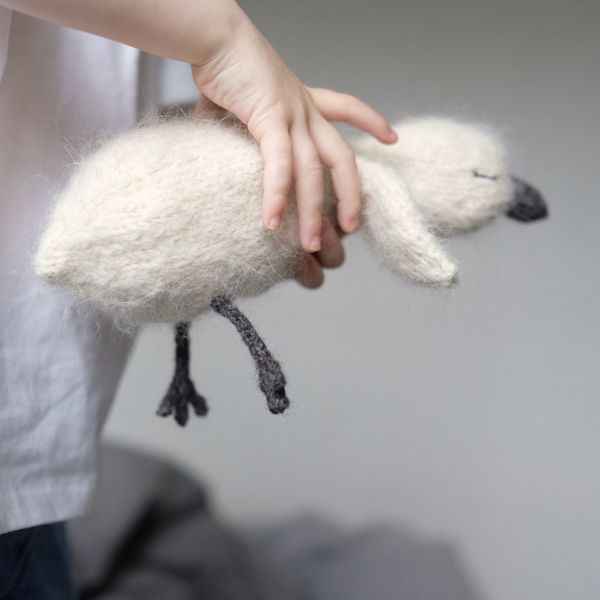
A small cygnet knitted from the designer's childhood memories of a fluffy duckling. It is worked from the head to the tail, with the head shaped through simple increases and decreases in stockinette, and the eyes embroidered on at the end.
Yarn: Rauma garn Iris Alpakka and Rauma garn Finull. Needles: 3.5 and 4 mm circulars, 80 cm.
Why we love it: there is a story in this one. It is the kind of animal you knit for someone you love, exactly as the designer intended.
4. Knitted Comforter Albert, by Meliora
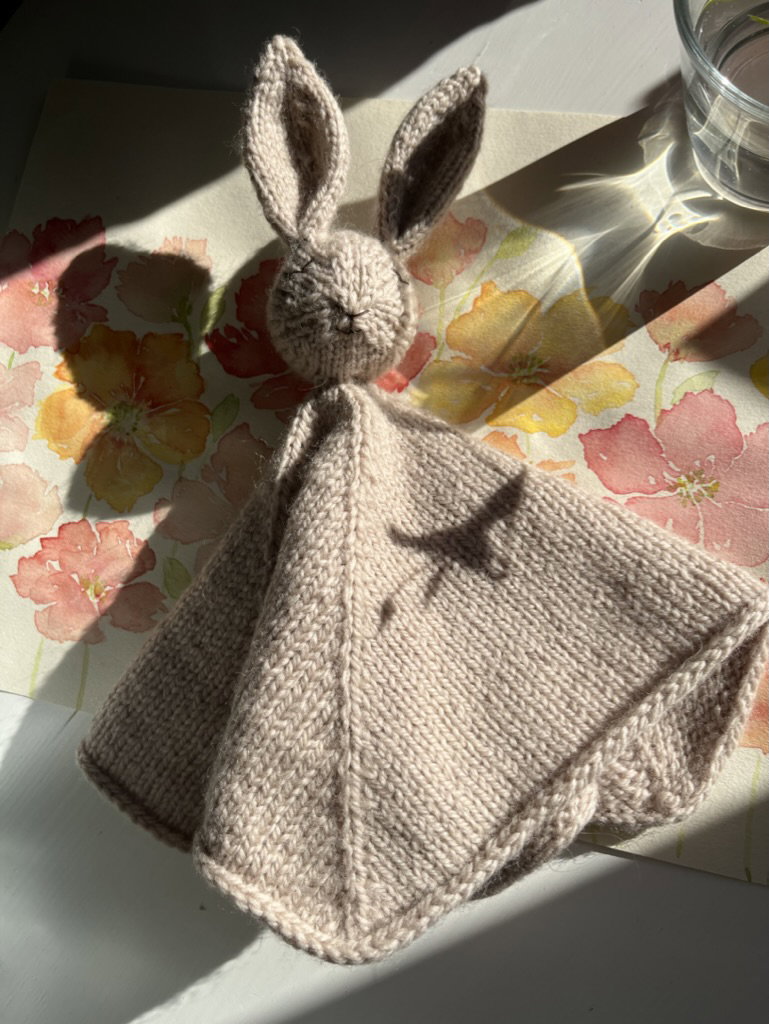
A comforter with a friendly face. You knit the head first, from the back of the head towards the snout, then the ears from the bottom up. The blanket part is worked from the center outward and bound off with a two-stitch i-cord along the edge. Then everything is sewn together, and there he is.
Yarn: Knit&Note Highland Wool. Needles: 3.5 and 4 mm circulars, 80 cm.
Why we love it: the construction is broken into clear, small steps. A good first comforter if the top-down blankets feel like a lot.
5. Dag & Dagny, by Aftenstrikk
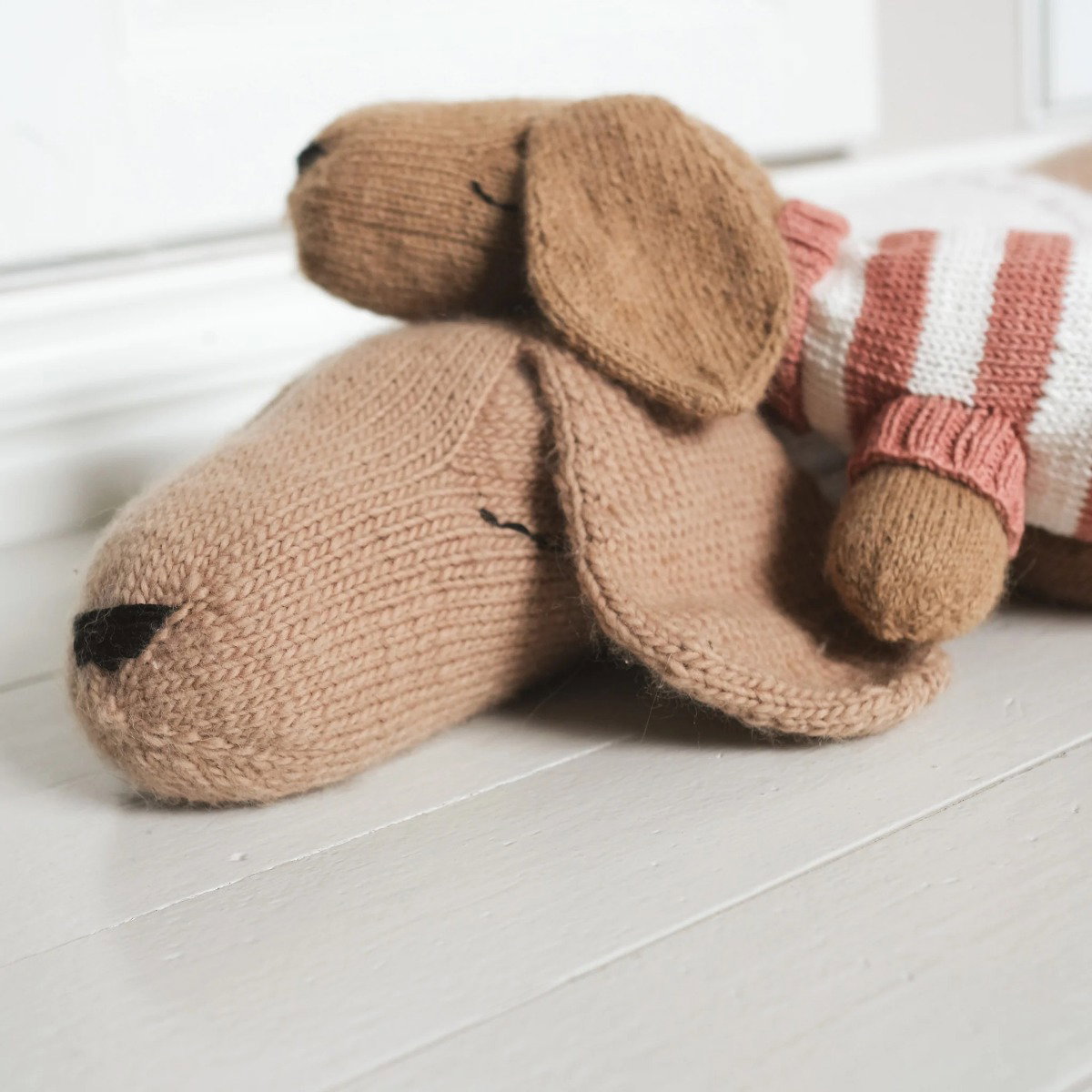
A knitted dog in two sizes, a larger bed dog and a smaller toy dog, worked from the muzzle to the tail. The pattern openly invites you to raid the leftover basket: stripe the sweaters, mix colors on the muzzle, ears and paws, and combine yarn types as long as the gauge matches.
Needles: 3.5 and 6 mm circulars, 80 cm.
Why we love it: it is the most playful pattern on this list. No two Dags or Dagnys end up alike, and that is the point.
In the Knit&Note app
All five patterns live in the Knit&Note app. The reader keeps your place with a row counter, which matters when you are shaping a head and every round counts, and abbreviations are explained with a tap. Your stuffed animal project fits in your pocket, right next to the yarn.
A few honest tips before you cast on
Knit tighter than you would for a garment. A dense fabric keeps the stuffing on the inside and survives years of hugging. If the fabric looks airy, go down a needle size.
For babies, embroider the eyes and mouth instead of sewing on buttons or beads. Anything that can come loose should not be on a toy for the youngest.
And do not stress about perfection. A slightly crooked ear is not a mistake. It is character.
FAQ
What yarn is best for knitted stuffed animals?
Wool is a classic choice. It is durable, keeps its shape and handles years of cuddling. Several of the patterns here use Rauma Finull, a sturdy wool that works beautifully for toys.
Are knitted stuffed animals safe for babies?
Yes, if you knit densely, stuff them well and embroider the face instead of attaching buttons or safety eyes that can come loose. Cuddle blankets like Sleepy Bear and Sleepy Bunny are made with the youngest in mind.
What do I stuff a knitted animal with?
Polyester fiberfill is the usual choice, it is washable and keeps its shape. Wool stuffing is a natural alternative. Stuff firmly but not so hard that the stitches stretch open.
Can I wash a knitted stuffed animal?
Check the yarn label. Wool toys usually prefer a gentle hand wash in lukewarm water. Squeeze out the water in a towel and let the animal dry flat.
Are stuffed animals hard to knit?
The shaping looks impressive but is mostly simple increases and decreases, repeated in the right places. If you can knit in the round, you can knit an animal. Start with a comforter like Albert if you want the gentlest introduction.


