
Get started
How to Start Crocheting: One Hook, One Loop, One Weekend
To start crocheting you need one hook around 8 mm, one ball of sturdy medium or chunky yarn, and two techniques: the chain and the single crochet. There is only ever one live loop on your hook, so mistakes are easy to undo. Your first real project can be a simple bag, finished in a weekend.
By the Knit&Note team
Crochet is the most forgiving way into yarn crafts. One hook, one loop on it at any time, and when something goes wrong you pull the yarn and the mistake is gone. Nothing falls off a needle, because there is no needle.
Here is how to go from never-held-a-hook to carrying a bag you made.
Buy two things
A hook around 8 mm. Big hooks make big, visible stitches, and the beginner-friendly bag patterns below use exactly this size. A hook with a slightly flattened grip is kinder to your hand, but any 8 mm hook works.
One ball of sturdy, smooth yarn in medium or chunky weight. Something with body, in a light solid color, so every stitch is easy to see. Fuzzy and dark yarns hide your work; save them for later.
Scissors and a blunt darning needle finish the list, and you probably own both.
Learn two stitches
Crochet has a whole family of stitches, but the first projects need exactly two:
The chain. Loop, yarn over, pull through. A row of chains is the foundation everything else builds on, and it is also the perfect first exercise: make chains while you watch TV until the movement bores you. Boredom means your hands have learned it.
The single crochet. Insert the hook, yarn over, pull up a loop, yarn over, pull through both. This one stitch makes a dense, sturdy fabric, and entire bags are built from nothing else.
Your first rows will lean and wobble and probably gain or lose a stitch. Count your stitches at the end of each row, laugh at the wobble, keep going. Row ten will look nothing like row one.
One thing to know before you follow any pattern
American and British patterns use the same words for different stitches. A US single crochet is a UK double crochet. It is the one genuinely confusing thing in beginner crochet, so check which terminology your pattern uses once, at the start, and then stop thinking about it. Every pattern in the Knit&Note app tells you which one it speaks.
Your first projects, in order
A practice swatch teaches your hands, but a real project is why you started. These three use nothing beyond chains and single crochet until you are ready for more:
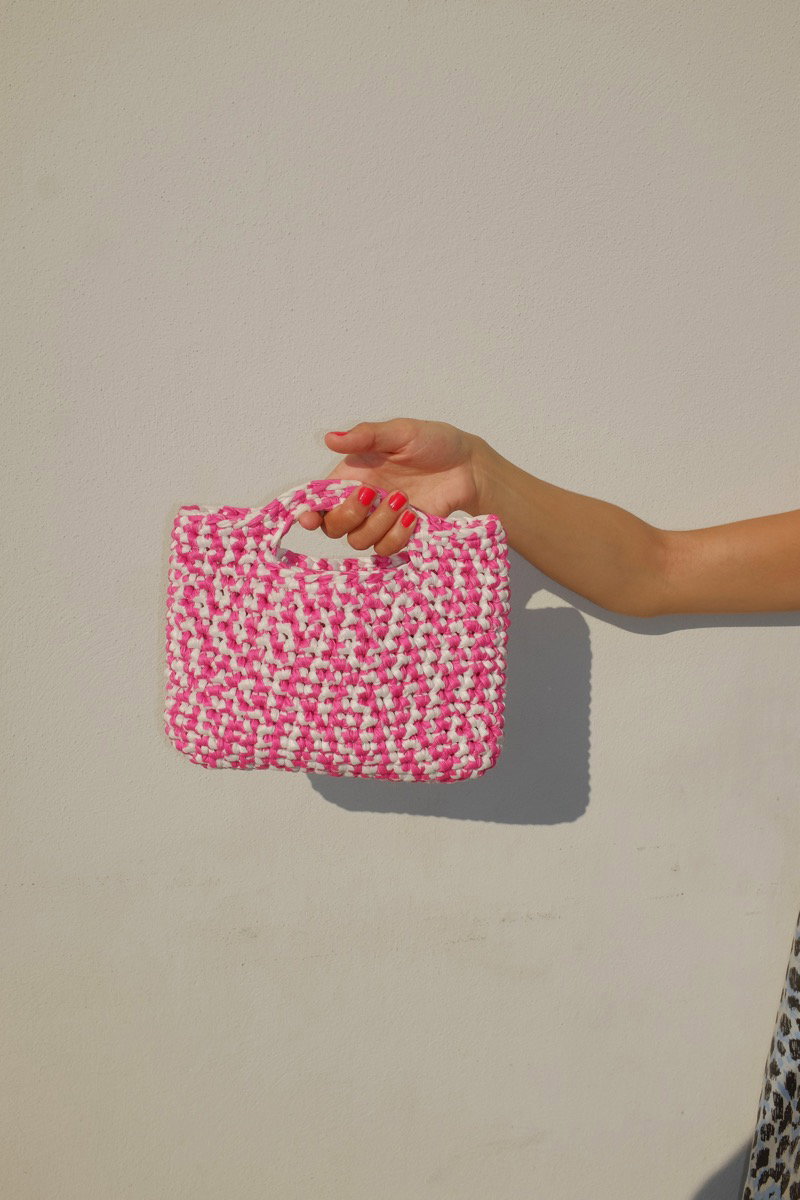
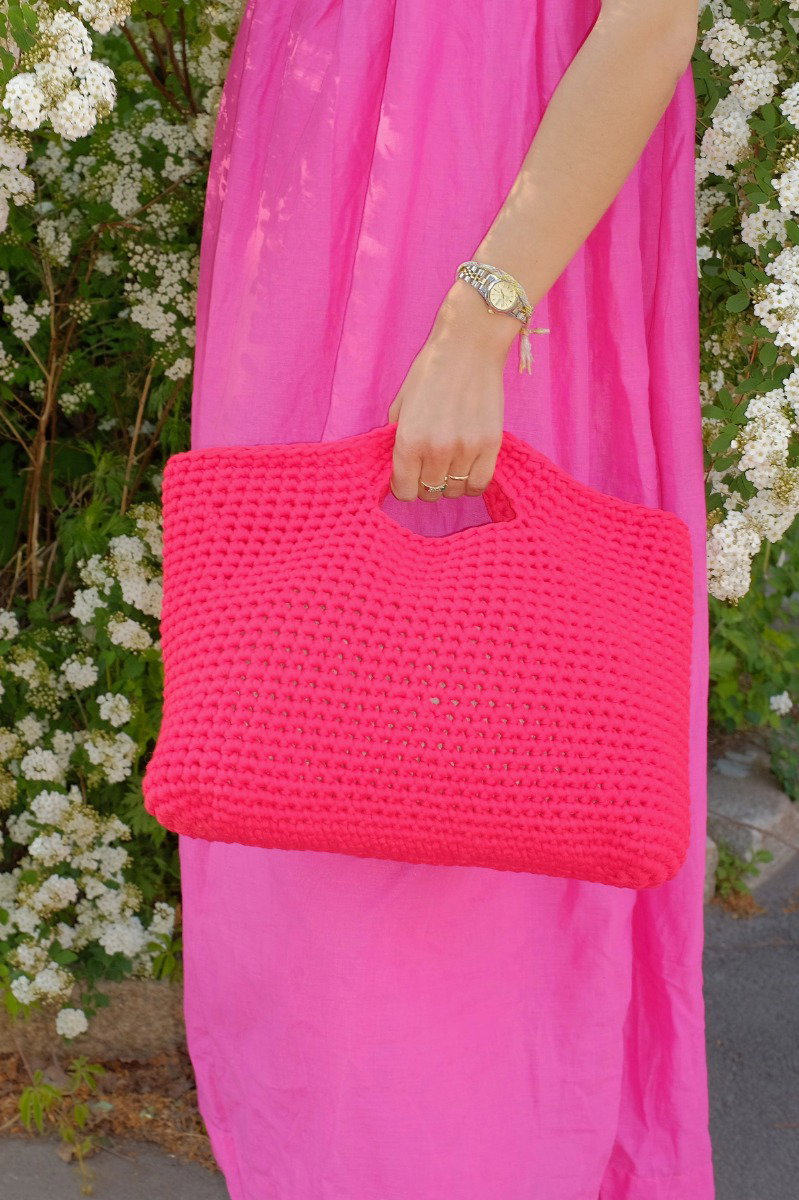
Littmyebag, by Strikkerlittmye. A sturdy everyday bag in single crochet: chain the base, work back and forth, then around and up until you chain the handles. One stitch, one finished bag, one weekend.
Littmye Beachbag, by Strikkerlittmye. The summer sibling, same construction, bigger and lighter. Pure repetition, which is exactly how hands learn.
Vorin Handbag, by Strikkevorin. Three flat pieces assembled into a bag, which quietly teaches you to read shapes, the skill every garment uses later.

In the Knit&Note app
These patterns live in the Knit&Note app. The reader keeps count of your rounds, explains terms when you tap them, and holds your notes exactly where you made them. Put the bag down for two weeks and the app still knows which round you were on.
FAQ
Is crochet easier than knitting?
They are different rather than ranked. Crochet has one live loop, so mistakes are less scary and undoing is instant, which many beginners find relaxing. Knitted fabric drapes differently. Plenty of makers end up doing both.
How long does it take to learn to crochet?
An evening for the chain, another for the single crochet to feel natural, and a weekend of relaxed hooking for a first bag.
What size hook should a beginner use?
Around 8 mm, with a medium or chunky yarn to match. Big stitches are readable stitches, and readable stitches are how you learn.
Can I teach myself to crochet?
Yes, and most people do. With a beginner pattern that explains its terms as you go, the learning curve is one quiet weekend.


